
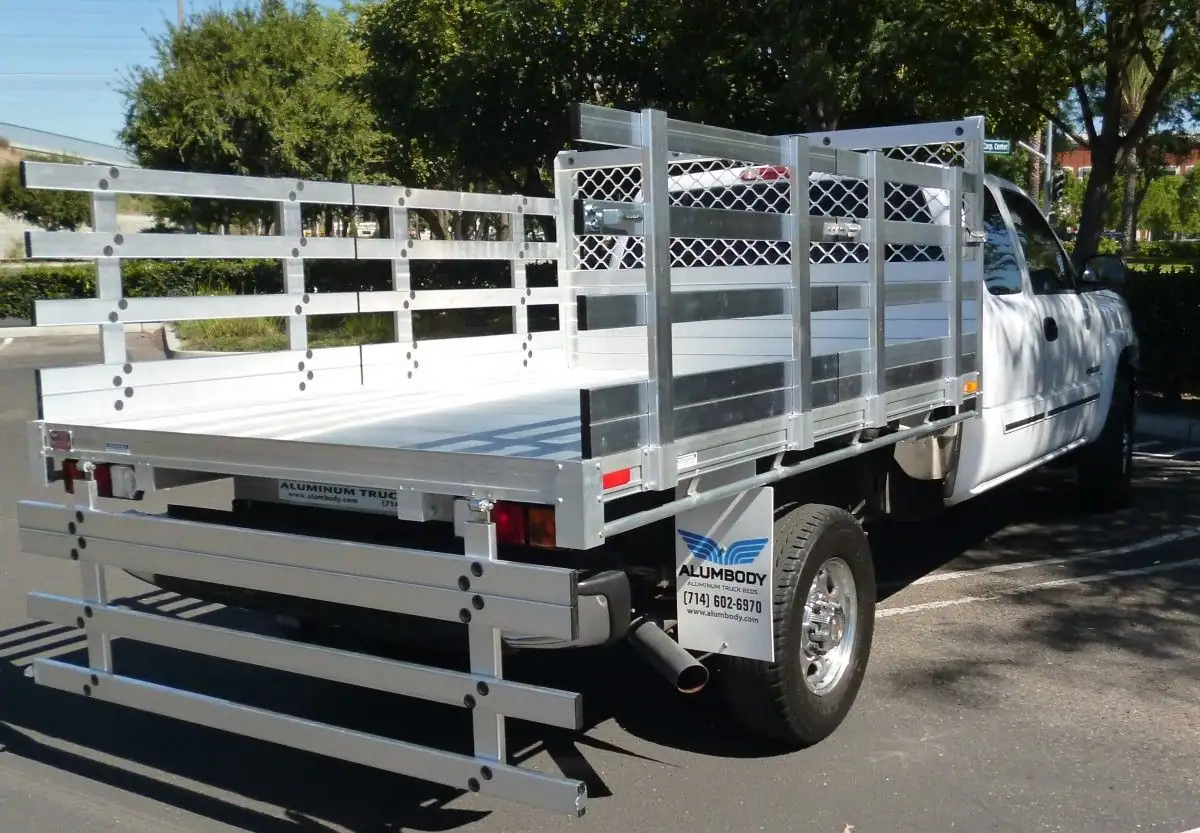
Truck Payload & Bed Weight Calculator
See how much payload a lighter bed gives back, and compare what the same plate weighs in aluminum and in steel.
The first calculator works out your truck's payload before and after a bed swap. The second compares the weight of the same piece of plate or sheet in aluminum and in steel. Everything is calculated in your browser; nothing you enter is sent or saved.
Payload gain calculator
See how much payload you get back by replacing your truck's bed with a lighter one. Example numbers are filled in; replace them with your truck's.
Gross Vehicle Weight Rating, from the label on the driver's door jamb.
Including the current bed. From a scale ticket, or curb weight from the manufacturer.
Guide weights: a typical 8' Alumbody aluminum flatbed is 350–450 lb, and a comparable 8' steel-and-wood bed is 800–1,000 lb. The buttons fill the middle of each range. Size, gates and accessories change the real weight, so for a factory pickup box or any other bed, weigh it or look up the weight for your exact truck.
Results
Payload gained
+500 lb+16%
Swapping beds gives back 500 lb of payload, 16% more than now.
- Payload now
- 3,100 lb
- Payload after the swap
- 3,600 lb
- Truck weight after the swap
- 6,300 lb
Payload now 3,100 lb. Payload after the swap 3,600 lb. Swapping beds gives back 500 lb of payload, 16% more than now.
Your truck's GVWR, axle ratings and the door-jamb label always set the real limit. These numbers are estimates.
Aluminum vs. steel weight calculator
Compare what the same plate or sheet weighs in aluminum and in carbon steel. Example: one 4' × 8' sheet, 1/8" thick.
Always in inches. Tap a common size or type a decimal, like 0.125.
Results
Weight saved with aluminum
107.2 lb
Aluminum weighs about 34% of steel for the same size.
- Aluminum
- 56.2 lb
- Carbon steel
- 163.4 lb
Densities used: aluminum 0.0975 lb/in³ (2.70 g/cm³), carbon steel 0.2836 lb/in³ (7.85 g/cm³).
Aluminum 56.2 lb. Steel 163.4 lb. Aluminum saves 107.2 lb and weighs about 34% of steel.
A finished aluminum bed isn't one-third the weight of a steel bed. Aluminum is about one-third as stiff, so its sheet, crossmembers and extrusions are made thicker and deeper. Read aluminum vs. steel truck beds.
How to find your payload
Payload is everything your truck can carry on top of its own weight: driver, passengers, tools, material and anything else in the cab or on the bed. The math is one line:
Payload = GVWR − the truck's weight as it sits today
- Find the GVWR. The Gross Vehicle Weight Rating is printed on the Safety Compliance Certification label on the driver's door jamb. It's the most the truck may weigh fully loaded. The same label lists the front and rear Gross Axle Weight Ratings (GAWR), the most each axle may carry.
- Weigh the truck. The manufacturer's curb weight is a starting point, but it leaves out you, your passengers and anything added since the truck left the factory. For a real number, cross a certified public scale, such as a CAT Scale at a truck stop, with a full tank and everything that rides along every day: the bed, tool boxes, racks and liftgate. Weighing the front and rear axles separately also shows how close each one is to its GAWR.
- Check the tire and loading label. Most pickups also have a Tire and Loading Information label on the door jamb. It lists seating capacity and the most that occupants and cargo combined should weigh. That figure describes the truck as it was built, so equipment added later, including a different bed, changes what's really left.
If you enter a curb weight in the calculator, the result is payload for people and cargo combined. If you enter a scale weight taken with you in the driver's seat, the result is what's left for passengers and cargo.
Why bed weight matters
The bed is part of the truck's weight, so every pound of bed is a pound of payload you can't use. The GVWR stays the same when you change beds, which makes the trade pound for pound: payload gained equals old bed weight minus new bed weight.
As a guide, a typical 8' Alumbody aluminum flatbed weighs 350–450 lb, versus 800–1,000 lb for a comparable steel-and-wood bed. Your bed's real weight depends on its size, gates and accessories, so weigh it or look up the exact figure if you can. A lighter bed doesn't raise the truck's GVWR, axle ratings, tire ratings or towing capacity. It leaves more of the ratings you already have for the load, with less dead weight on the tires, brakes and suspension.
Alumbody has built aluminum flatbeds in Orange, California, since 1978, from high strength 6000 series aluminum. The floor carries an 8,000 lb distributed load rating, which in most cases is more than the truck's GVWR, so the truck's own ratings always govern. Specs are on the bed features page. To see what deck size fits, read the flatbed size guide or find your truck.
Aluminum vs. steel by the numbers
| Property | Aluminum | Carbon steel |
|---|---|---|
| Density | 0.0975 lb/in³ (2.70 g/cm³) | 0.2836 lb/in³ (7.85 g/cm³) |
| 1 sq ft of 1/8" plate | 1.76 lb | 5.10 lb |
| 1 sq ft of 3/16" plate | 2.63 lb | 7.66 lb |
| 1 sq ft of 1/4" plate | 3.51 lb | 10.21 lb |
| Stiffness (modulus of elasticity) | About 10,000 ksi | About 29,000 ksi |
| Typical yield strength | 6061-T6: about 35–40 ksi | A36: about 36 ksi |
By volume, aluminum weighs about 34% as much as carbon steel. It is also about one-third as stiff, so an aluminum part the same size as a steel one flexes about three times as much under the same load. Bed builders make up for that with thicker sheet and deeper crossmembers and extrusions, which is why a finished aluminum bed is significantly lighter than a steel bed but not one-third the weight.
Strength is closer than most people expect. 6061-T6 aluminum has a typical yield strength of about 35–40 ksi, in the same range as A36 structural steel at about 36 ksi, at roughly a third of the weight. For corrosion, cost and repair as well, read aluminum vs. steel truck beds.
When you're ready to take weight off your truck, request a quote with your year, make and model.
Payload and bed weight questions
How do I calculate my truck's payload?
Subtract the truck's weight as it sits today from its GVWR. The GVWR is on the Safety Compliance Certification label on the driver's door jamb. For the weight, use a public scale such as a CAT Scale, with a full tank and everything that normally rides on the truck. What's left is what you can add in people and cargo.
How much does an aluminum flatbed weigh?
It depends on size, gates and accessories. As a guide, a typical 8' Alumbody aluminum flatbed weighs 350–450 lbs, versus 800–1,000 lbs for a comparable steel-and-wood bed.
Is aluminum lighter than steel?
Yes. Aluminum's density is about 2.70 g/cm³ (0.0975 lb/in³) versus about 7.85 g/cm³ (0.2836 lb/in³) for carbon steel, so the same plate weighs about 34% as much in aluminum. A finished aluminum bed isn't one-third the weight of a steel bed, because aluminum parts are made thicker and deeper to make up for lower stiffness, but it is still significantly lighter.
Does a lighter truck bed increase payload?
Yes, pound for pound. The GVWR doesn't change when you swap beds, so every pound taken off the bed is a pound of payload you can use for cargo. A lighter bed does not raise the truck's GVWR, axle ratings or towing capacity.
Where do I find my truck's GVWR?
On the Safety Compliance Certification label on the driver's door jamb, which also lists the front and rear Gross Axle Weight Ratings (GAWR). Most pickups also have a Tire and Loading Information label there showing seating capacity and the most that occupants and cargo combined should weigh.
Related pages
- Aluminum flatbedsCustom flatbeds for pickups and cab-chassis trucks.
- Bed features & specsMaterials, ratings and warranty.
- Aluminum vs. steel truck bedsWeight, strength, rust and cost compared.
- Flatbed size guideWhat deck size fits your truck.
- Find your truckReal builds for every make and model we fit.
- Aluminum stake bedsFlatbeds with lift out stake sides for tall loads.
Ready for a lighter bed?
Tell us your truck and the job — we email or text a firm quote within 2 business days.