The True Cost of a Truck Bed: What to Weigh Beyond the Price Tag
A practical checklist for comparing truck beds on total cost of ownership: payload, fuel and tires, rust, hardware, gates, downtime, appearance and warranty.

The true cost of a truck bed is the purchase price plus everything the bed costs you while you own it: payload lost to the bed's own weight, fuel and tire wear, rust repair and repainting, worn hardware, time off the road, and how the bed looks when you sell the truck. Two beds with different price tags can end up closer than they look, or further apart.
We won't put dollar figures on these factors, because they depend on your truck, your work and how long you keep it. But each one is worth asking about before you buy. Here's the checklist, with a question to ask for each.
Total cost of ownership at a glance
| Factor | How it costs you over time | Question to ask |
|---|---|---|
| Payload | The bed's weight comes out of what the truck can carry | What does the finished bed weigh, or what is it made of? |
| Fuel, tires, brakes | Extra weight takes more fuel to move and puts more load on tires and brakes | How much lighter is this bed than the alternative? |
| Rust and repainting | Steel rusts where the coating is chipped; keeping it up takes time and paint | What upkeep will this bed need in my climate? |
| Hardware | Hinges, latches and pins that corrode or seize need replacing | Are the hinges, latches and pins stainless steel? |
| Gates and hinges | Gates that sag or bind cost time every day | How are the gates framed, hinged and latched? |
| Downtime | A truck in the shop isn't working | What's the lead time, and how long will the truck be down? |
| Appearance | Rust, dents and peeling paint show when you sell | How will this bed look after years of work? |
| Warranty | Repairs outside the warranty are on you | What's covered, for how long, and is it in writing? |
1. The payload you keep
Every truck has a gross vehicle weight rating (GVWR): the most it may weigh fully loaded, including the bed, passengers, fuel and cargo. Whatever the bed weighs comes out of what you can carry. Aluminum weighs about one-third as much as steel by volume. A finished aluminum bed isn't one-third the weight of a steel bed, because the sections are sized differently, but it is significantly lighter, and that difference goes back into usable payload. Your truck's payload, GVWR and axle ratings always govern, whatever the bed itself is rated for.
2. Fuel, tires and brakes
Carrying extra weight all day takes energy to accelerate and puts more load on tires and brakes. How much that matters depends on your truck, your route and how much stop-and-go driving you do, so we won't put a number on it. What's certain is that the bed rides along on every trip, loaded or empty, so its weight is a cost you pay every mile.
3. Rust and repainting
Steel rusts wherever its coating is chipped or scratched, and rust can spread under the paint if it isn't treated. Keeping a steel bed in good shape means sanding, priming and repainting over its life. Aluminum doesn't rust, because rust is iron oxide and aluminum has no iron. It forms a thin oxide layer that protects the surface.
To be fair, aluminum isn't immune to everything. It can corrode where it touches a dissimilar metal and moisture is present, and strong acids or bases can attack it. Sensible hardware choices handle the first; rinsing off harsh cleaners handles the second. Our aluminum vs. steel comparison covers the material differences in more detail.
“I've purchased metal truck beds in the past but have never been satisfied — I always had to deal with rust and corrosion.”
— Lindsey, Fabulous Flowers
4. Hardware quality
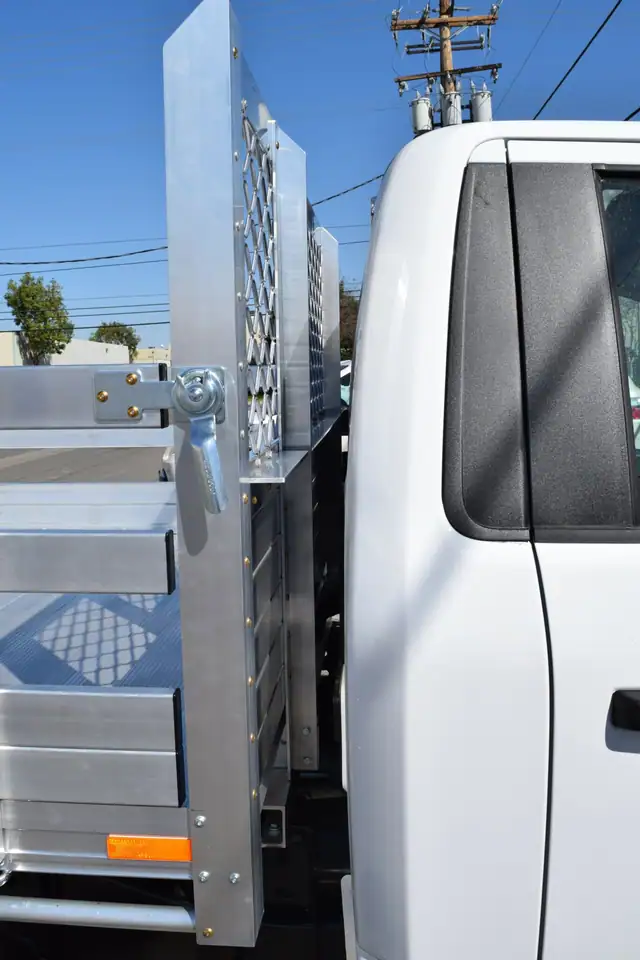
Hinges, latches, pins and fasteners are the parts that move, and the parts most likely to corrode or seize if they're the wrong material. Ask what each one is made of. On Alumbody beds, gate hinges are 304 stainless steel, and latches and locking pins are stainless steel. Stainless hardware is used on our pool truck beds and is available for wet or cold climates.

5. Gate and hinge durability
Gates get opened, closed, lifted out and leaned on more than any other part of the bed. A gate that sags, binds or rattles costs you time every day and eventually needs repair. Ask how the gates are framed, hinged and latched, and whether the style fits how you load: fold down gates drop flat for side and forklift loading, while lift out gates give you height and come off when you need them out of the way. Our gate frames use 6061-T6 aluminum extrusion. You can compare styles on our gates page.

6. Downtime
A work truck that's in the shop isn't earning. Ask two things: how long until the bed is ready, and how long the truck itself will be out of service. Our typical lead time for standard flatbeds and stake beds is 2–4 weeks; heavily customized builds may take longer. If the bed is shipped instead of installed at our Orange, California shop, your truck stays in service until the bed arrives and is installed locally. It's also worth asking how you'd get a replacement part, such as a latch or a gate pin, if one is ever damaged.
7. Appearance when you sell
When you sell or trade the truck, the bed is one of the first things a buyer looks at. Rust streaks, peeling paint and bent gates are hard to miss. We won't put a number on what condition is worth, because that depends on the buyer and the market, but a bed that still looks straight and clean doesn't need explaining.
8. Warranty terms
Read the warranty before you compare prices. Ask what's covered, for how long, and what isn't, and get it in writing. Alumbody beds carry a 3-year structural warranty and a 1-year lighting warranty. You'll find the rest of our specs on the bed features page.
How to compare two truck bed quotes on total cost
- Make sure both quotes are for the same bed size, gates, bumper and add-ons.
- Ask what each bed is made of, and its finished weight if the builder can give it.
- Check what the hinges, latches, pins and fasteners are made of.
- Compare warranties on what they cover, not just how long they last.
- Compare lead times and how long the truck will be off the road.
- Confirm whether installation or freight is included.
- Weigh the price difference against everything above for the years you plan to keep the truck.
When the lower price is the right call
Not every truck needs the longest-lasting bed. If the truck is lightly used, mostly parked, rarely sees wet weather, or you plan to replace it soon, the up-front price may reasonably matter more than any of these factors. The point of this checklist is to make that a deliberate choice rather than a surprise later.
If you'd like to see how an aluminum bed compares for your truck, request a quote. We'll email or text a firm quote within 2 business days.
Frequently asked questions
What is the total cost of ownership of a truck bed?
It's the purchase price plus what the bed costs you while you own it: payload lost to its weight, fuel and tire wear, rust repair and repainting, hardware replacement, downtime, and its condition when you sell the truck.
Does a lighter truck bed save fuel?
Carrying less weight takes less energy, so a lighter bed can help. How much depends on your truck, route and driving, so we don't put a number on it.
Do aluminum truck beds rust?
No. Rust is iron oxide, and aluminum forms a thin protective oxide layer instead. Aluminum can still corrode in some conditions, such as contact with a dissimilar metal when moisture is present.
What warranty comes with an Alumbody truck bed?
Alumbody beds have a 3-year structural warranty and a 1-year lighting warranty.