How to Choose the Right Truck Liftgate: Tommy Gate G2 vs. Maxon 66-16
Size it to your heaviest load and largest footprint, match it to the truck, pick a stow style, and plan it with the bed. Here's how we work through it.

To choose a truck liftgate, start with the heaviest load you lift regularly and the largest footprint you need on the platform. Then check that the truck's ratings can carry the gate plus the load, and decide how the platform should stow. The brand comes last. On our aluminum flatbeds and stake beds we install two liftgates: the Tommy Gate G2-Series, our most popular, and the Maxon 66-16.
Start with your heaviest regular load
Capacity is the first number to pin down. Think about the heaviest thing that goes on the platform in a normal month, not a once-a-year job you could rent equipment for. Then add everything that rides up with it: the pallet jack or hand truck, the pallet itself and any packaging.
Read how the manufacturer defines the rating. Liftgate capacities assume the load sits in a specific position on the platform, and a load pushed out toward the far edge works the gate harder than the same weight set close to the truck. Choosing a gate with some headroom over your typical load is easier on the equipment than running it at its limit every day.
Size the platform to your largest footprint
Platform size is the second number. Measure the biggest item you lift and the space you need around it to move safely: a pallet on a pallet jack, an appliance on a dolly, a cart or a mower. A platform that only just fits the load leaves no room for the person handling it.
That was the problem on Armando's 1997 Ford Super Duty. Its old liftgate platform was too small for the loads the truck handled. We built new aluminum gates for the truck and retrofitted a Tommy Gate G2:
“The new gates are light, operate smoothly, and stay cool to the touch no matter how hot it gets outside. The lift-gate gave us the extra foot we needed to safely maneuver full pallet loads.”
— Armando, on a Tommy Gate G2 retrofit with new Alumbody gates on a 1997 Ford Super Duty
Tommy Gate G2 vs. Maxon 66-16
These are the two liftgates we install. Both are solid choices; the right one depends on your truck and your load.
| Tommy Gate G2-Series | Maxon 66-16 | |
|---|---|---|
| Known for | Our most popular liftgate; dual hydraulic cylinders for an even lift | A heavy-duty pickup liftgate with a 1,600 lb capacity |
| Capacity | Depends on the G2 model; we match it to your load | 1,600 lb |
| Typical trucks | Matched to your truck and bed when we quote | Ford F-250/F-350, Chevy Silverado and Ram 2500–3500 |
| With an Alumbody bed | Integrates well with our flatbed and gate design | Planned into the rear of the bed during the build |
Tommy Gate G2-Series
The G2-Series is the liftgate our customers choose most. Its dual hydraulic cylinders lift the platform evenly, and it integrates well with our flatbed and gate design. It's also the liftgate you'll see most often in our install photos.
Maxon 66-16
The Maxon 66-16 has a 1,600 lb capacity and suits heavy-duty pickups: the Ford F-250 and F-350, and the Chevy Silverado and Ram 2500 and 3500. It's a good match when you run one of those trucks and want a known 1,600 lb rating.
Flatbed with liftgate or stake bed with liftgate?
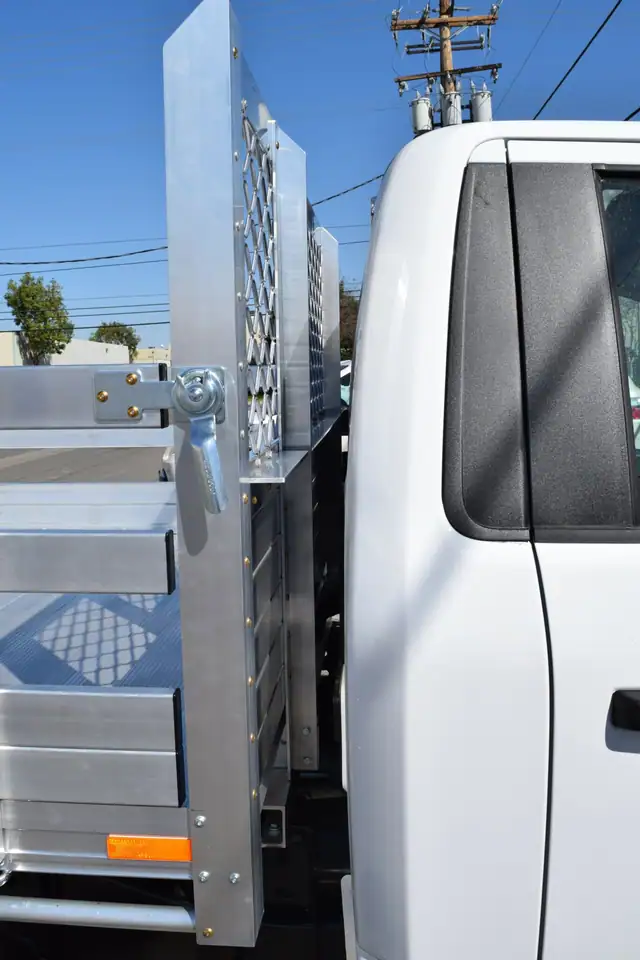
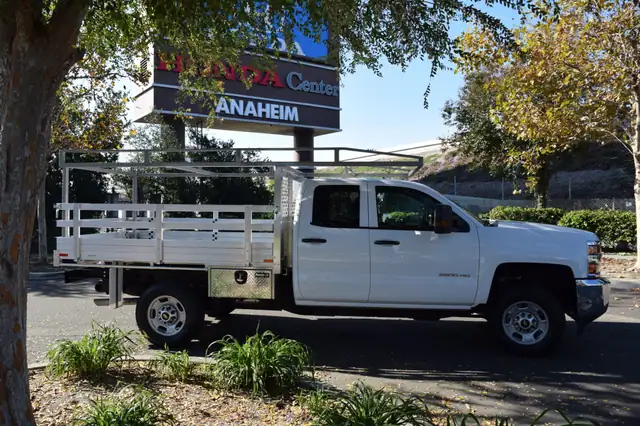
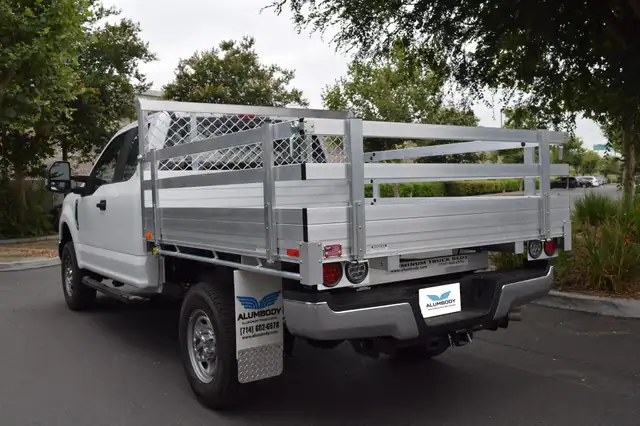
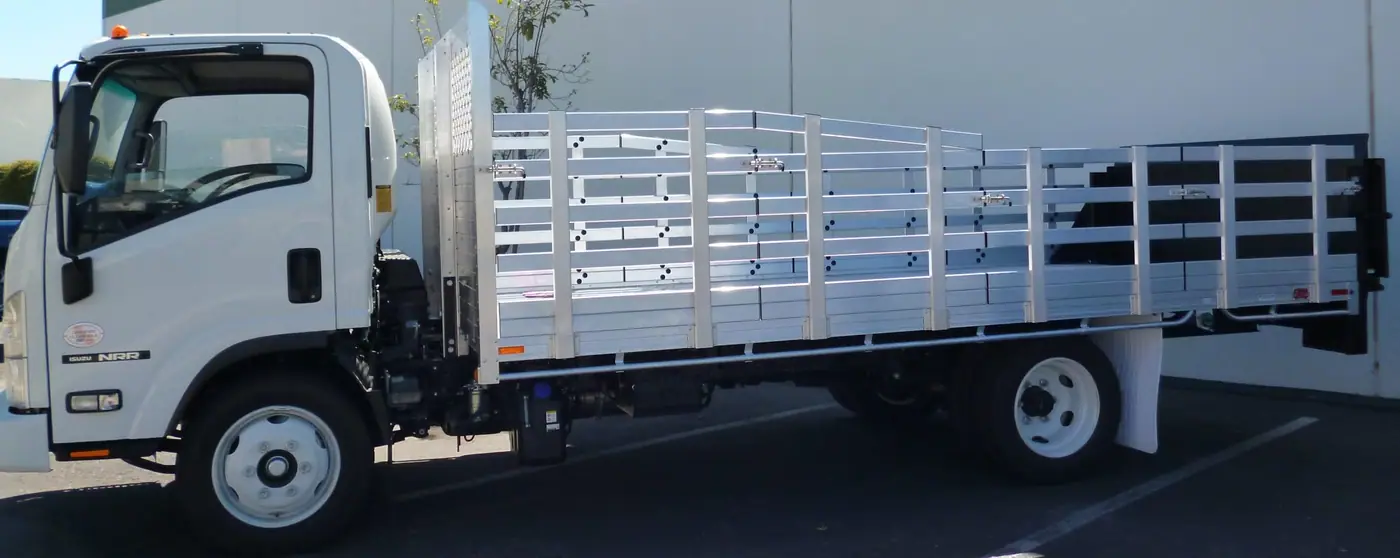
Both work well. An aluminum flatbed with 22" fold-down sides gives you side loading plus a platform at the rear. An aluminum stake bed with 30", 38" or 41" lift-out gates keeps taller or loose loads contained. Real installs in our liftgate gallery include a Chevy Colorado flatbed with 22" fold-down sides, a Ford F-250 6'6"×9' stake bed with 38" lift-out stakes, and an Isuzu NPR 8'×16' stake bed with 38" and 30" lift-out stakes, each with a Tommy Gate in the rear.

Match the liftgate to the truck
A liftgate adds weight at the very back of the truck, behind the rear axle, and every pound of the gate counts against your payload. Before choosing a model, look at the labels on the driver's door jamb: the gross vehicle weight rating (GVWR), the rear gross axle weight rating (GAWR) and the payload figure. The truck's ratings always govern what you can carry, whatever the bed or liftgate is rated for.
Our aluminum floors have an 8,000 lb distributed load rating, which in most cases is more than the truck's GVWR. That's why the truck, not the bed, is usually the limit.
Power is part of the picture too. Truck liftgates are generally electro-hydraulic and run from the truck's electrical system, so wiring and charging are part of planning the install.
Liftgate stow styles, in general terms
How the platform stows when you're not using it affects how you load, tow and park. The two styles you'll see most on pickups and cab-chassis trucks:
- Fold-up: the platform folds and stands upright at the back of the bed, closing off the rear of the deck much like a tailgate. It's simple to use, and the platform is right there when you need it.
- Stow-under (tuck-under): the platform folds and stows beneath the rear of the bed. The back of the deck stays open, which helps if you load at docks, but the stowed platform sits low, so ground clearance and departure angle need a look.
A few questions point you toward the right style. Do you back up to loading docks? Do you tow? Does the truck climb steep driveways or ramps? Do you have a factory backup camera? If you do, tell us, so we plan the rear of the bed around it. We'll confirm which configuration works with your truck and bed when we quote.
Plan the liftgate with the bed, or prepare for it
A liftgate works best when the bed, gates and bumper are designed around it. On a new Alumbody bed we plan the rear of the deck, the side gates and the bumper with the liftgate in mind, and gate styles can be mixed to suit the job. A common setup is 22" fold-down gates on the sides with a Tommy Gate in the rear; stake beds with 38" lift-out gates and a liftgate are common too. See gate options for heights and styles.
Not ready for a liftgate yet? We can pre-wire the rear sub-frame and bumper for a liftgate on the original build, so adding the gate later is simpler.
Already have a truck and bed? Retrofits can be done, as Armando's Super Duty shows. Send us photos and details of the truck and bed, and we'll tell you what's involved.
What to have ready for a liftgate quote
- Truck year, make and model, and whether it's single or dual rear wheel.
- The bed you have or want: flatbed or stake bed, size and gate style.
- Your heaviest regular load, including the pallet jack or dolly.
- The largest footprint you lift.
- How you load: from the ground, at a dock or with a forklift.
- Whether you tow, and whether the truck has a factory backup camera.
Send those details through our quote form and we'll reply with a firm quote by email or text within 2 business days.
Frequently asked questions
What size liftgate do I need for a pickup truck?
Size it to the heaviest load you lift regularly, including the pallet jack or dolly, and to the largest footprint you need on the platform. Then confirm the truck's payload and rear axle ratings can carry the gate plus the load.
Can you put a liftgate on a flatbed?
Yes. Liftgates are common on flatbeds and stake beds, and we install the Tommy Gate G2-Series and Maxon 66-16 on our aluminum beds. Planning the liftgate with the bed lets the gates and bumper work around it.
How much can a Maxon 66-16 lift?
The Maxon 66-16 has a 1,600 lb capacity. It suits heavy-duty pickups such as the Ford F-250/F-350 and the Chevy Silverado and Ram 2500–3500.
Does a liftgate reduce payload?
Yes. The liftgate's own weight counts against the truck's payload, and it sits behind the rear axle, so check the rear axle rating as well as the GVWR.
Can I add a liftgate later?
Yes. On a new Alumbody bed we can pre-wire the rear sub-frame and bumper for a liftgate so adding it later is simpler, and retrofits on existing trucks can be done too.