Chlorine vapor eats steel. Muriatic acid eats steel faster. The average pool truck running a steel bed has visible corrosion in the chemical compartment by the end of the second season, and structural failure somewhere between year four and year six. We rebuild a lot of these — and after the first rebuild, every single customer goes aluminum the second time. Nobody comes back to steel twice.
Why aluminum changes the entire math
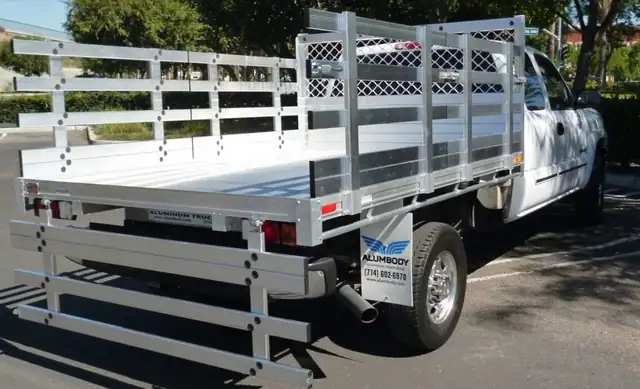
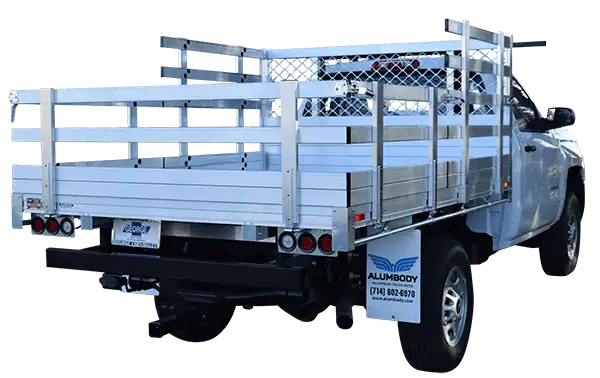
Aluminum is rated for direct contact with most pool chemicals in industrial concentration. Combine that with stainless steel hardware throughout — every bolt, every hinge pin, every latch — and you have a bed that genuinely does not care about chlorine. No more rust streaks down the side panel from a cheap fastener. No more pitted welds at the bottom of the chemical box. No more annual paint touch-up to hide the damage from last summer's spill.
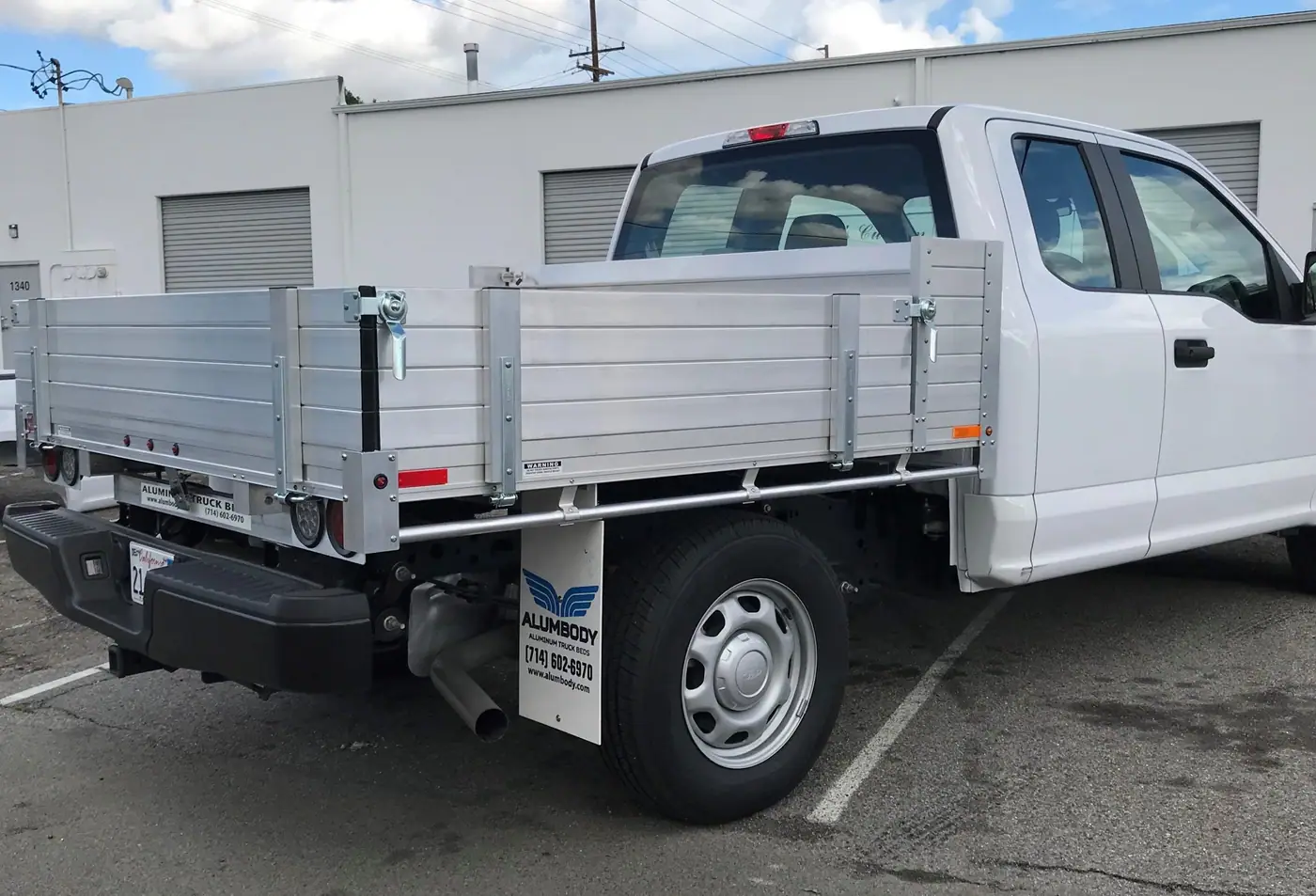
The fold-down side height nobody talks about
Most pool trucks ship with 12-inch fixed sides. They look fine in a brochure photograph and they're miserable to actually work out of. A tech reaching over a 12-inch fixed side to pull a hose reel a hundred times a day is going to be in physical therapy by year three, and they'll quit the job before they tell you it was the truck that did it.
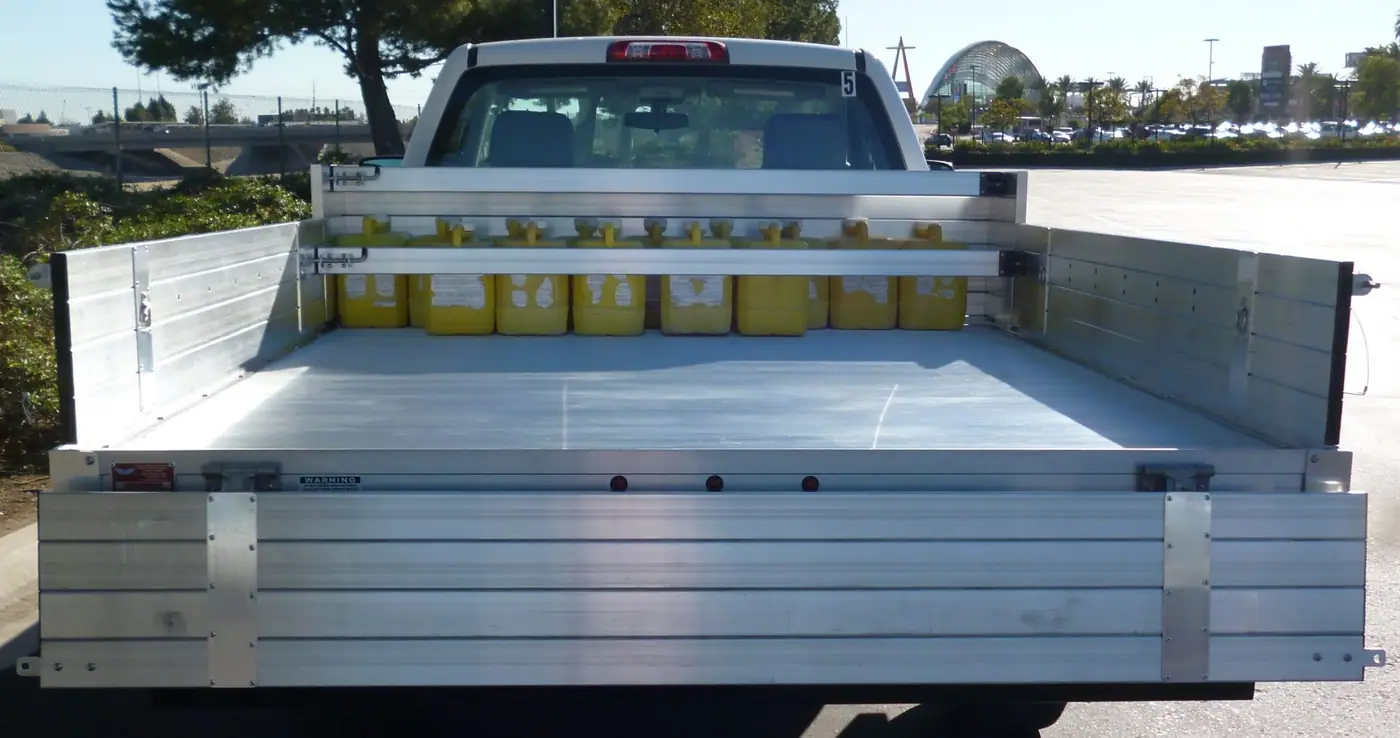
9-inch fold-down sides clear at proper waist height for an average adult, fold flat in two seconds when you need a real flatbed, and lock back up clean for the drive between stops. It is the small spec change with the biggest real-world impact in this entire build, and almost nobody offers it as standard.
The chemical compartment, done right
- Sealed and vented from the bottom. Chlorine vapor is heavier than air — if you vent from the top, you're not venting.
- Spill containment lip welded directly into the floor, not bolted in and not caulked. One continuous piece of aluminum.
- Stainless steel latch hardware throughout. Galvanized fasteners will rust through in eighteen months and you will smell it from inside the cab.
- A separate, fully isolated compartment for acid storage, with chemical-resistant gasket seals and its own bottom vent.
- Tie-down points rated for the actual sloshing load of a 35-gallon chemical drum, not the static weight printed on the side of it.
What it pays back
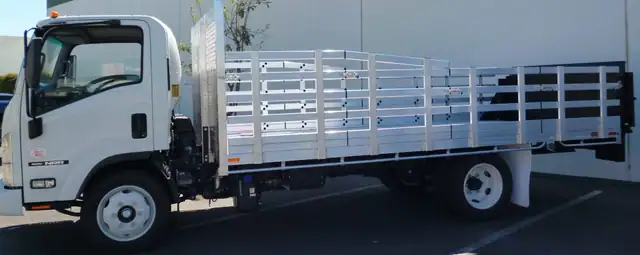
A typical pool route owner running a steel truck replaces the bed somewhere between year four and year five, at a cost between $8,000 and $12,000 installed. The aluminum build, properly speced, outlasts the truck — we have customers on their third chassis under the same aluminum body. That cost avoidance, plus the fuel savings on the weight reduction across 30,000 route miles a year, pays back the upgrade in roughly eighteen months. After that, you're just printing money compared to the guy across town still on steel.