Diamond Plate Aluminum on a Truck Bed: Where It Helps and Where to Skip It
What tread plate is, where its raised pattern earns a place on a working truck, its downsides compared with smooth aluminum sheet, and how to choose.
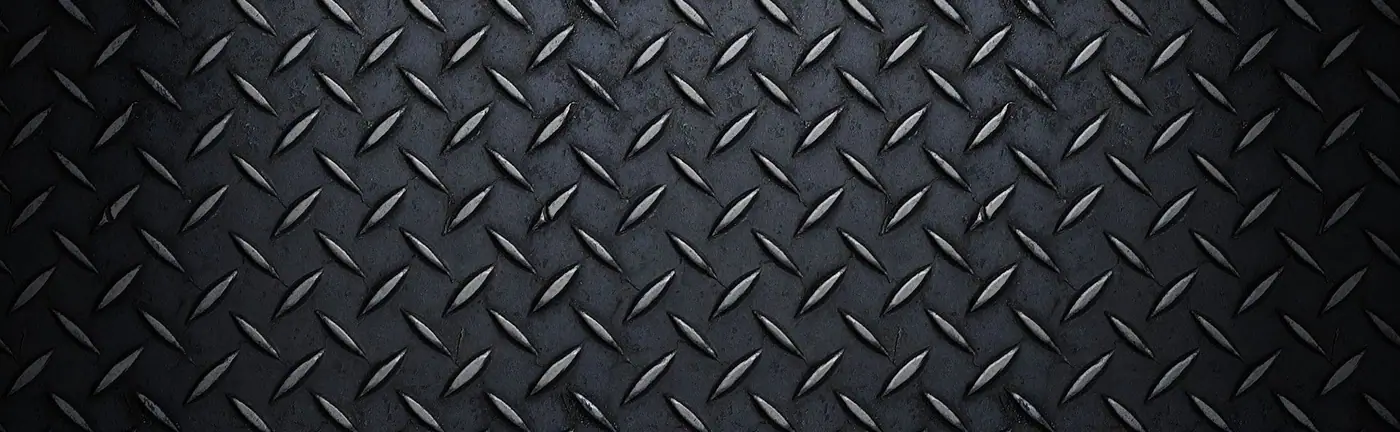
Diamond plate aluminum, also called tread plate or checker plate, is aluminum sheet or plate with a raised diamond pattern on one face. On a truck bed, the pattern earns its place on surfaces people step on or cargo scrapes against, such as steps, bumpers, headboard faces and wear strips. Elsewhere, smooth aluminum sheet is usually the better pick: it's lighter at the same base thickness, easier to clean and easier to letter.
What is diamond plate aluminum?
Diamond plate is made by rolling a pattern of raised lugs into one side of the metal; the back stays flat. The texture gives boots more to grip and breaks up the surface so scratches and scuffs are less noticeable. Steel and stainless steel diamond plate exist too, but on an aluminum truck bed, aluminum tread plate keeps the weight down and avoids mixing metals.
It's commonly sold in a bright, reflective finish chosen for looks and a plainer mill finish chosen for utility. A bright finish dulls over time as the aluminum oxidizes unless it's polished again. Either way, it's still aluminum, so it won't rust.
Where diamond plate helps on a truck bed
Steps and dock bumpers
Anywhere someone climbs onto the bed, a textured surface helps footing and hides boot scuffs. Our beds can keep the factory bumper or add a dock style bumper, including 2-step dock bumpers. If you want a tread surface on the step, ask about it when you request a quote. Keep in mind that any metal surface, textured or not, can be slippery with mud, oil, water or ice.

Headboards
Cargo gets pushed forward into the headboard, and the lower part of a solid headboard takes most of the scrapes, so tread plate is a common facing there. Our standard headboard is an aluminum mesh window guard, and we've built custom and tapered headboards, so if you want a solid or tread-plate lower section, ask.
Wear strips and contact surfaces
Gate tops, rub rails, loading edges and panels near the wheels take repeated contact from tools, cargo and road debris. A strip of tread plate on a contact surface hides wear that would show on smooth sheet, and because the area is small, so is the added weight.
Bed floors
A tread-plate floor adds texture underfoot and hides scratches from dragged equipment. It also has costs: cargo doesn't slide as easily across the raised pattern, the floor takes longer to sweep and rinse clean, and because the floor is the largest surface on the bed, it's where the extra weight adds up most. If you want a tread-plate floor, it's an option to ask about.
Diamond plate tool box lids: the debate
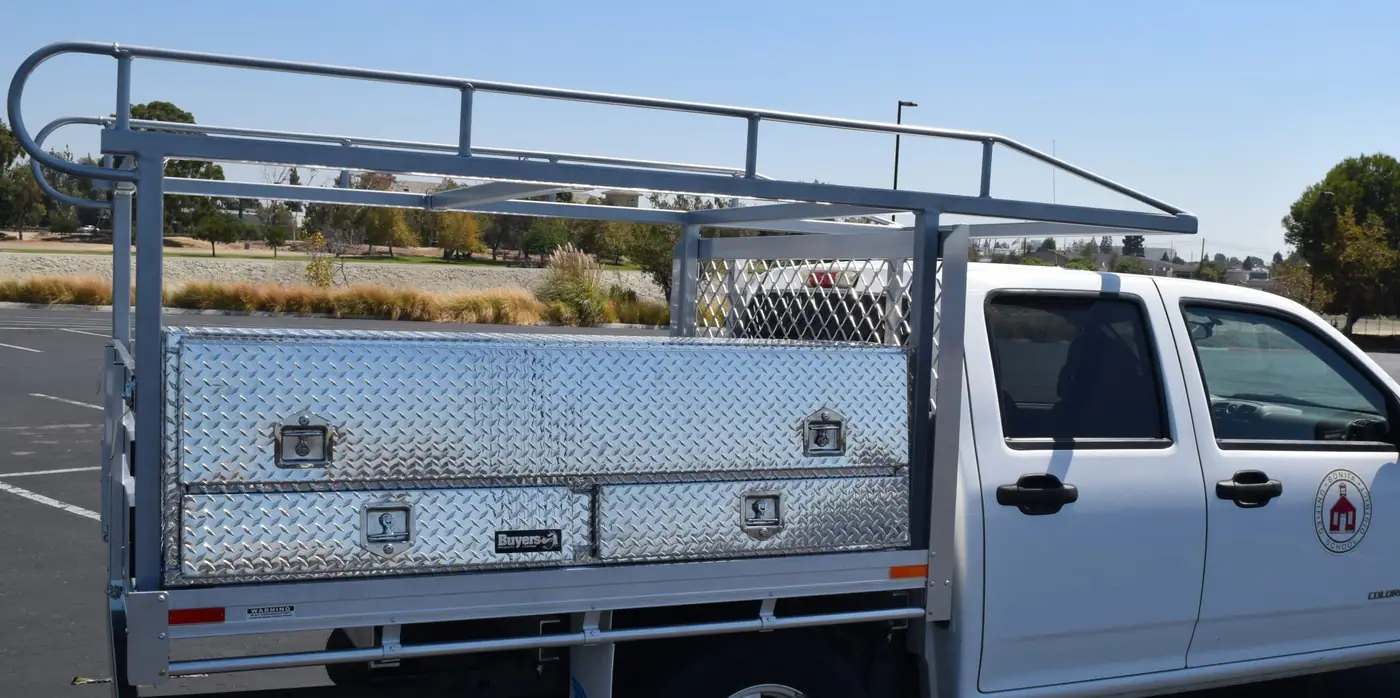
Tool box lids are where opinions split. Tread plate lids have the traditional look and hide scratches well. Smooth lids wipe clean faster, don't hold leaves, sand or water in the pattern, and take company lettering and decals much better. Neither is wrong; it comes down to how you use the boxes and whether the truck carries fleet graphics.
We build topside and underbody aluminum tool boxes in a range of sizes, from 14" × 12" × 18" underbody boxes to 21" × 13" × 72" topside contractor boxes. If you have a preference for the lid surface, ask about it when you request a quote. For layout ideas, see tool box configurations by trade.
Downsides of diamond plate
- Weight. At the same base thickness, tread plate weighs more than smooth sheet because the raised pattern is extra metal. Every pound on the bed is a pound less payload.
- It holds dirt. Sand, leaves, mud and water collect between the lugs, so cleaning takes a brush and a rinse instead of a quick wipe.
- Lettering is harder. Vinyl decals and lettering don't lie flat on a textured surface.
- Cargo drags. Boxes and equipment don't slide across the raised pattern as easily.
- A bright finish takes upkeep. Polished tread plate dulls over time unless it's polished again.
- Too much can look busy. Used on every surface, the pattern can overwhelm a clean bed design.
Tread plate vs. smooth aluminum
| Diamond (tread) plate | Smooth aluminum sheet | |
|---|---|---|
| Grip underfoot | Raised pattern adds texture, most useful on steps | Smooth; can be slick when wet |
| Hiding scratches and scuffs | Pattern hides wear well | Shows scratches more readily |
| Weight at the same base thickness | Heavier, because the raised pattern adds metal | Lighter |
| Cleaning | Dirt and debris collect between the lugs | Wipes and hoses off easily |
| Decals and lettering | Hard to apply on the textured face | Easy to apply |
| Sliding cargo | More resistance | Slides more easily |
| Look | Traditional industrial look; a bright finish dulls unless polished | Clean, plain look; can be left bare or powder coated |
How to choose
- Start with where people step. Steps, bumpers and any surface you climb on are the strongest case for tread plate.
- Add it where cargo scrapes. Headboard faces, gate tops and loading edges are good candidates for wear strips.
- Keep the big surfaces simple. Floors and sides are where tread plate's extra weight and cleaning time add up.
- Plan for lettering. If the truck carries a company name or fleet number, keep smooth panels where the graphics will go.
- Ask at quote time. Every bed is measured to the truck, so tell us how you'll use it and ask about surface options for the steps, headboard, floor and tool boxes.
For ideas, browse our aluminum flatbeds and custom builds. If you're still deciding on the metal itself, read aluminum vs. steel truck beds.
Frequently asked questions
What is diamond plate aluminum?
It's aluminum sheet or plate with a raised diamond pattern rolled into one face, also called tread plate or checker plate. The pattern adds texture underfoot and helps hide scuffs and scratches.
Is diamond plate heavier than smooth aluminum?
Yes. At the same base thickness, tread plate weighs more because the raised pattern is extra metal. On a large surface like a bed floor, that difference adds up.
Is diamond plate slippery when wet?
The raised pattern gives more texture than smooth sheet, but any metal surface can be slippery with water, mud, oil or ice. Treat it as an aid to footing, not a guarantee.
Should my truck bed floor be diamond plate?
It depends on how you load. Tread plate hides scratches and adds texture, while a smooth floor is lighter at the same base thickness, easier to clean and lets cargo slide more easily. Ask about floor options when you request a quote.
How do you clean diamond plate aluminum?
Rinse it, wash with mild soap and a soft brush to reach between the lugs, then rinse again. Avoid strong acid or alkaline cleaners, which attack aluminum, unless the product is made for aluminum and you follow its directions.