Custom Tool Boxes vs. Off-the-Shelf: What Fits a Flatbed Best
How to size tool boxes to the deck and frame, choose topside or underbody, keep clearance for gates, lights and the hitch, and when a standard box is all you need.

For most flatbeds, the best tool box is one sized to the space it goes in: the deck length for topside boxes, and the room below the deck beside the frame for underbody boxes. A custom-fit box can use that space fully, match the bed's material, and leave clearance for gates, lights and the hitch. An off-the-shelf box is perfectly fine when a standard size already fits that space and does the job. Here's how to decide.
Custom-fit vs. off-the-shelf at a glance
| Factor | Custom-fit box | Off-the-shelf box |
|---|---|---|
| Size | Made to the deck and frame of your truck | Standard sizes; you fit the truck to the box |
| Use of space | Can fill the available length and depth | May leave gaps or call for a smaller size |
| Clearance | Planned around gates, lights, camera and hitch | Needs checking before you buy |
| Material match | Aluminum box on an aluminum bed | Varies; check for dissimilar metals |
| Timing | Planned and built with the bed | Often available right away |
| Up-front cost | Usually more, since it's made to size | Usually less |
How to size a tool box to a flatbed's deck and frame
A flatbed gives you two places for boxes: on top of the deck, and below it. Each has its own limits. Topside boxes are limited by the deck length and by how much deck width you're willing to give up. Underbody boxes are limited by the depth below the deck and the open space outside the frame rails, ahead of and behind the rear wheels. Midsize trucks have less room in both places than a full-size pickup or a cab chassis, so their boxes tend to be smaller.
That's why there's no single right size. Here are tool box sizes we've built on past Alumbody beds (the last number is the length):
| Placement | Sizes built |
|---|---|
| Underbody | 14" × 12" × 18", 14" × 12" × 24", 14" × 12" × 30", 18" × 18" × 36", 18" × 18" × 48", 18" × 24" × 48", 18" × 18" × 60" |
| Topside | 16" × 13" × 72", 16" × 13" × 88", 18" × 18" × 60", 21" × 13" × 72" (contractor boxes), 24" × 24" × 36" |
Every bed is measured to the truck, and the boxes are planned along with it. Our flatbed size guide shows typical bed sizes by truck.

Topside or underbody tool boxes?
Topside boxes
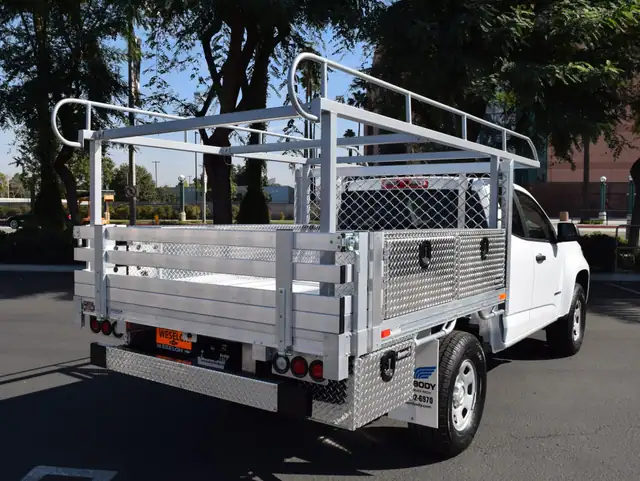
Topside boxes sit on the deck along the sides and can run much of the bed's length. They hold long items and a lot of gear, and you open them from the side of the truck. The trade-off is deck width: every inch of box is an inch of deck you can't load. They pair well with a ladder rack, which carries long stock above the boxes.
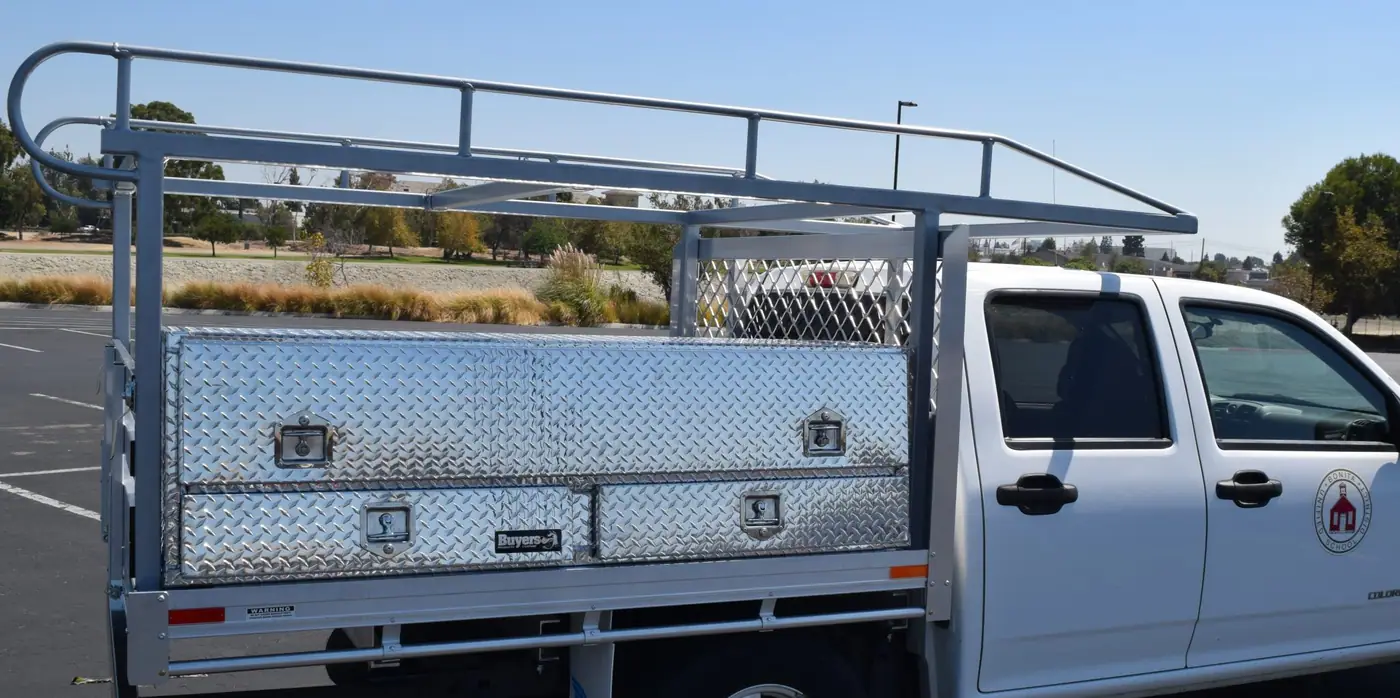
Underbody boxes
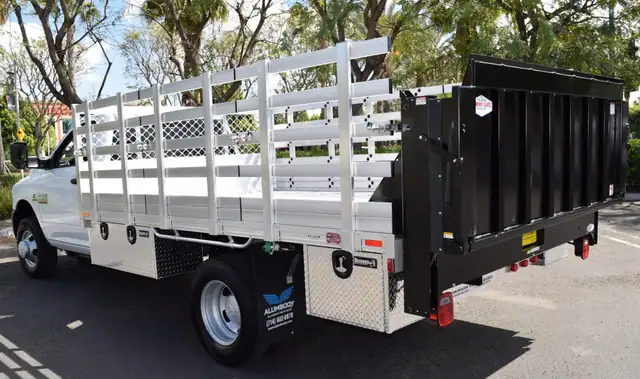
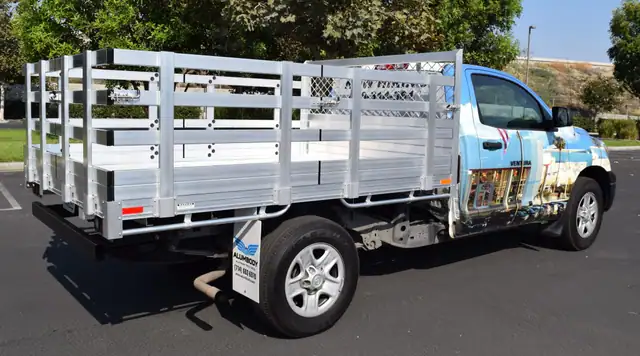
Underbody boxes mount below the deck, outside the frame rails, so the deck stays clear for cargo. You reach them from the side without climbing onto the bed, and they're a good home for heavy gear you'd rather not lift up onto the deck.
“We now have easy access to any part of our truck beds at any time without having to climb in for supplies, and more overall space to fit all of our equipment.”
— Juan, Urban Graffiti Enterprises
Many beds use both: topside boxes for the tools you grab all day, and underbody boxes for heavier or less-used gear. Our post on tool box layouts by trade has more ideas.
Match the bed's material and hardware
An aluminum box on an aluminum bed keeps weight down and won't rust. It also avoids putting dissimilar metals in direct contact. When two different metals touch and moisture is present, galvanic corrosion can attack one of them, and when aluminum is paired with steel, it's the aluminum that suffers. If you mount a box made of another metal, isolate it from the deck.
Hardware matters as much as the box. Lids get opened over and over, so ask what the hinges and latches are made of, whether the box locks, and how the lid seals. Alumbody's topside and underbody tool boxes are aluminum, our gate hinges, latches and locking pins are stainless steel, and stainless hardware is available for wet or cold climates. If your bed is powder coated, ask about finishing the boxes to match.
Keep clearance for gates, lights and the hitch
A box that fits the space can still get in the way. Check these before you settle on sizes:
- Gates: topside boxes take up the deck edge where side gates would go, so plan gate heights and positions around them. Fold down side gates swing down past the edge of the deck, so make sure they clear any underbody box below.
- Lights and camera: rear lights and a factory backup camera need to stay visible and unblocked.
- Hitch and bumper: a receiver hitch needs room for the coupler, safety chains and trailer wiring, so keep boxes clear of that area.
- Liftgate: a liftgate takes up space at the rear of the bed for the platform and its mounting.
- Under the truck: exhaust, wiring and anything else mounted along the frame.
When an off-the-shelf box is perfectly fine
A custom box isn't always the better choice. A standard box makes sense when:
- A standard size already fits the space without blocking gates, lights or the hitch
- You need basic storage and don't need every inch of the space
- You need the box right away
- You expect to move the box to another truck later
If you go that route, check that the box is designed to mount on a flat deck, isolate any dissimilar metals, and tell your bed builder about it so they can leave room.
How to plan tool boxes for a new flatbed
- List what you carry, and mark what has to lock up.
- Separate everyday tools from heavy or occasional gear. Topside suits the first; underbody often suits the second.
- Note anything long, like levels, pipe or ladders, that needs a rack or a long box.
- Decide on gates, bumper and hitch first, since the boxes have to clear them.
- Add tool boxes in the quote form and tell us what you want to store.
You can see more examples on our tool box page and in our aluminum flatbed builds. We'll email or text a firm quote within 2 business days.
Frequently asked questions
What size tool box fits a flatbed?
It depends on the deck length and the room below the deck beside the frame. Sizes we've built range from 14" × 12" × 18" to 18" × 18" × 60" underbody boxes and 16" × 13" × 72" or 88" topside boxes, among others.
Should I get topside or underbody tool boxes?
Topside boxes hold more and suit long items, but they use deck width. Underbody boxes keep the deck clear for cargo. Many flatbeds use both.
Why use an aluminum tool box on an aluminum truck bed?
It's lighter, it won't rust, and it avoids dissimilar-metal contact, which can lead to galvanic corrosion when moisture is present.
Does Alumbody build tool boxes?
Yes. We build topside and underbody aluminum tool boxes for our flatbeds and stake beds. Add them in the quote form and we'll plan them with your bed.