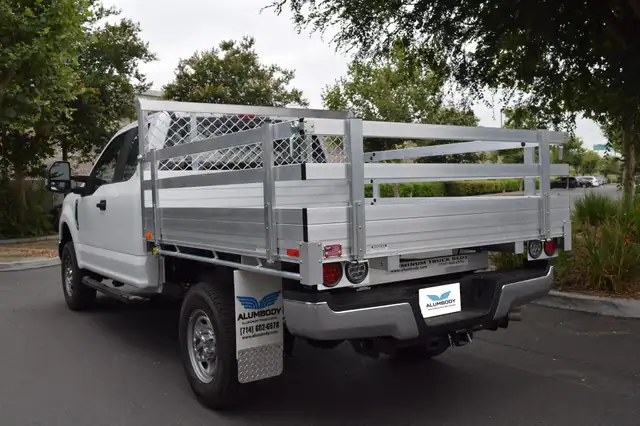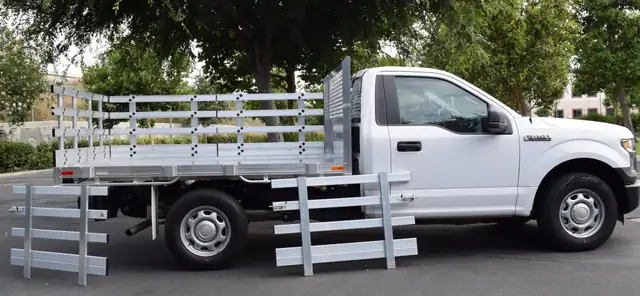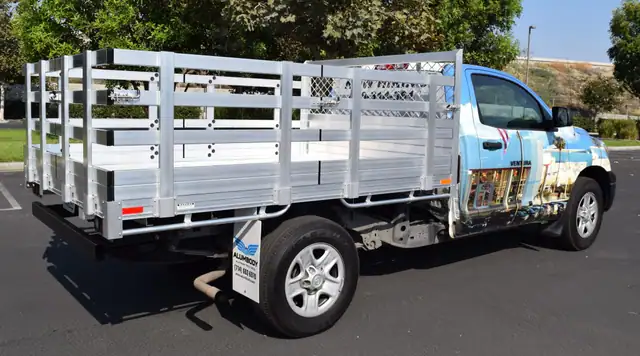
How to Care for an Aluminum Truck Bed (Year-Round and Winter)
Aluminum doesn't rust, but the hardware, lights, seals and liftgate still need attention. A simple routine for washing, inspecting and getting through salt season.

Caring for an aluminum truck bed comes down to a few habits: wash off dirt and road salt with mild soap and water, check and lubricate the hinges, latches and pins, keep the lights, wiring and tool box seals in good shape, and maintain any liftgate according to its manual. The aluminum itself doesn't rust, so most of the attention goes to the parts that move, seal or carry current. In winter, do the same things more often.
Why an aluminum bed still needs some care
Aluminum forms a thin oxide layer on its surface that protects the metal underneath, and it doesn't rust, because rust is iron oxide. That's a big part of why aluminum beds are low maintenance. A dull gray look on bare aluminum is that oxide layer, not damage.
Low maintenance isn't no maintenance. Aluminum can corrode in some conditions: where it touches a different metal, such as steel or copper, with moisture present, or when it's exposed to strong acids or strong alkalis. Road salt makes that moisture more conductive and speeds things along. And a bed is more than aluminum. It has stainless steel hinges and latches, lights and wiring, tool box seals and maybe a liftgate, and all of them last longer with regular attention.
How to clean an aluminum truck bed
- Rinse first. Hose off loose dirt, mud and salt before you scrub, so you're not grinding grit into the surface. Include the underside, the crossmembers, the stake pockets, behind the gates and around the hinges.
- Wash with mild soap. Car-wash soap in a bucket of water and a soft brush or wash mitt is all the bed needs.
- Rinse thoroughly, so no soap film or salt is left in seams and corners.
- Let it dry, and wipe water off tool box seals and lid edges.
- Use a pressure washer with care. Keep the nozzle back from lights, wiring connectors and tool box seals, and don't aim straight into them.
Check hinges, latches and pins
On our beds, the gate hinges are 304 stainless steel and the latches and locking pins are stainless steel. Stainless resists corrosion well, but grit, salt and dried mud can still make hardware stiff or stop a latch from seating fully. Every month or so, and after any heavy or dirty job, run through the gates:
- Open and close each fold-down gate. It should swing freely without binding.
- Lift out each lift-out gate and set it back in. Clear any debris from the stake pockets.
- Make sure every latch closes fully and every locking pin is in place and straight.
- Look for loose or missing fasteners on the gates, racks, bumper and tool boxes.
Lubricate moving parts
After washing, put a light coat of lubricant on hinges, latch mechanisms and pins. Washing strips old lubricant, so that's the right time to replace it. Use a product made for exposed outdoor hardware, work each part a few times to spread it, and wipe off the excess, since extra lubricant collects dirt.
Inspect lights and wiring
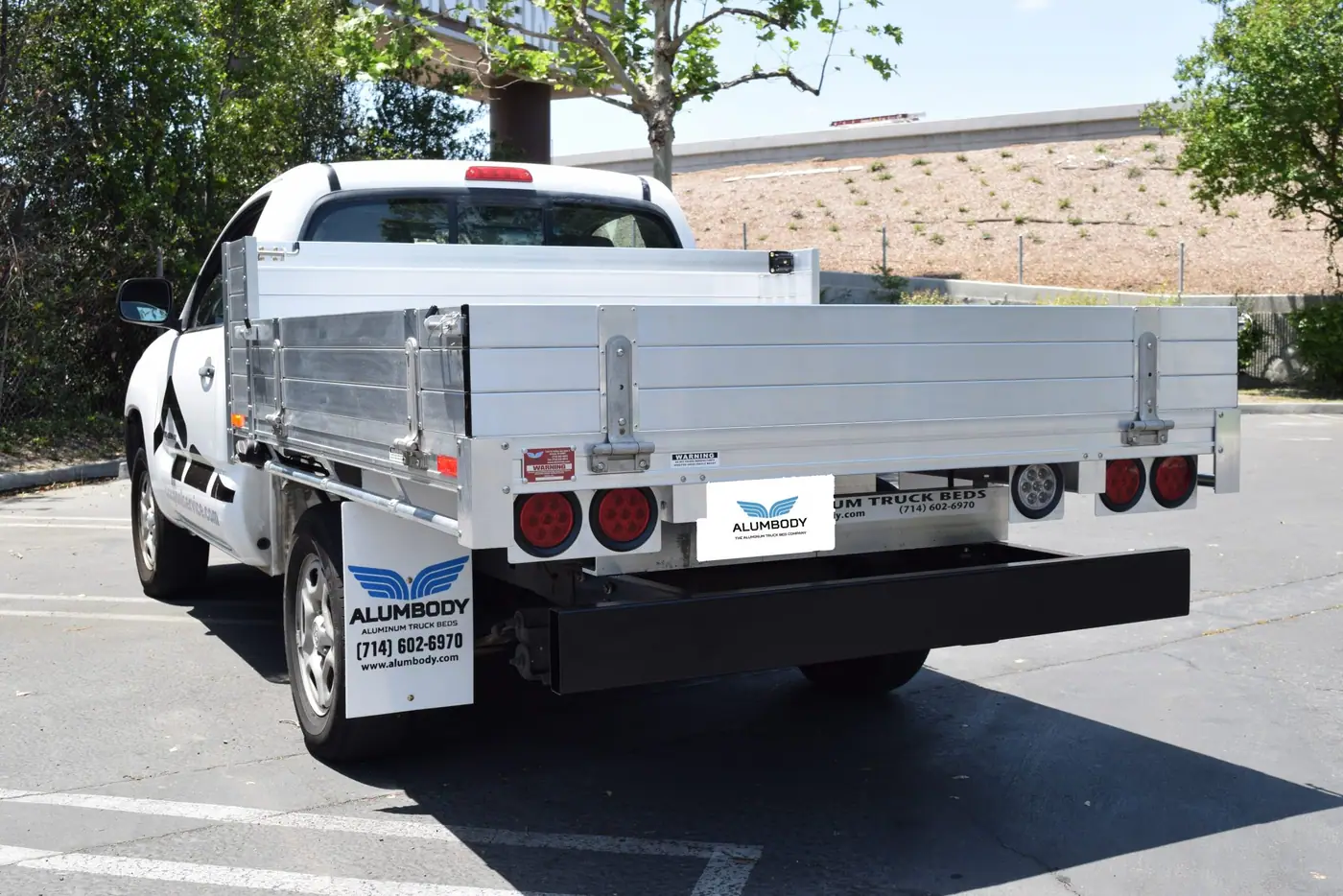
Walk around the truck with the lights on: tail, brake, turn signals, clearance and marker lights, plus any LED work lights and the reverse camera. Where you can see the wiring, look for chafed insulation, loose clips and corrosion at the connectors, especially after winter. Many owners put dielectric grease on connectors to help keep moisture out.
Tie-downs, racks and tool boxes
- Tie-downs: check D-rings and other tie-down points for cracks, wear or looseness before you rely on them, and replace straps that are frayed or cut.
- Racks: make sure ladder racks and pipe or lumber racks are tight and nothing has worked loose.
- Tool box seals: clean the lid seal with mild soapy water and look for tears, flattened spots or gaps. A seal in good shape is what keeps rain and road spray out of the box.
- Tool box latches and locks: work them, and if they're stiff, use a lubricant suitable for locks.

Liftgate checks: follow the manufacturer's manual
If your bed has a Tommy Gate or Maxon liftgate, the owner's manual for that model is the authority on maintenance: what to check, how often, and with which fluids and lubricants. Common items on liftgate checklists include the hydraulic fluid level, leaks at hoses and fittings, lubricating pivot points, the condition of the battery and power cables, and keeping warning decals readable. If you don't have the manual, ask the manufacturer for a copy.
Stop using the liftgate and have it looked at if it lifts unevenly, drifts down under load, makes new noises or leaks fluid.
Watch for dissimilar-metal contact
Galvanic corrosion happens when two different metals touch with moisture between them. When aluminum touches steel or copper, the aluminum is the side that corrodes, and road salt makes it worse. In practice:
- Don't leave steel plate, rebar, chain, copper pipe or wet steel tools sitting on the deck for weeks, especially in winter. Put a rubber mat or wood dunnage under steel items that ride on the deck long term.
- Before drilling or bolting on an accessory, ask us about the right hardware. A steel bracket bolted straight to aluminum can trap moisture at the joint.
Winter care for an aluminum truck bed
Winter doesn't change the routine so much as speed it up. Road salt and brine cling to everything under and around the bed, and slush packs into corners.
- Rinse more often. After salty drives, or every week or two through salt season, rinse the deck, gates, tool boxes and underside, including the crossmembers and the truck's frame. Truck frames are steel, so the truck benefits too.
- Free frozen latches gently. Don't hammer a frozen latch or pry at a gate that's iced shut. Warm (not boiling) water or a de-icer works; then dry and re-lubricate.
- Clear snow with a plastic shovel or brush rather than a metal scraper, to avoid gouging the deck.
- Keep tool box seals clean, so lids close fully and water doesn't get in and freeze.
- Ask about stainless steel hardware. It's available for wet and cold climates.
- When spring comes, do a full wash, underside included, and run through the hardware, lights and liftgate checks.
A simple aluminum flatbed care schedule
| Task | Suggested frequency | What to look for |
|---|---|---|
| Rinse and wash with mild soap | Every few weeks; after salty drives in winter | Dirt, salt and grime in seams, corners and underneath |
| Gates, hinges, latches and pins | Monthly | Binding, latches not seating, bent or missing pins |
| Lubricate moving parts | After washing, or every few months | Stiff hinges and latches |
| Lights and wiring | Weekly walk-around | Lights out, chafed wires, corroded connectors |
| Tie-downs and racks | Before heavy loads | Cracks, wear, loose fasteners |
| Tool box seals and locks | Monthly | Tears, gaps, lids not closing evenly |
| Liftgate | Per the manufacturer's manual | Fluid level, leaks, uneven lifting |
When to call us
Call if you see cracks, bent crossmembers, gates that no longer line up, or lights that stop working. Alumbody beds carry a 3-year structural warranty and a 1-year lighting warranty. You can reach us at (714) 602-6970, Monday through Friday, 8:00 AM to 4:00 PM, or through our contact page. For more on how aluminum holds up compared with steel, see aluminum vs. steel truck beds.
Frequently asked questions
How do you clean an aluminum truck bed?
Rinse off loose dirt and salt, wash with a mild car-wash soap and a soft brush, then rinse thoroughly, underside included. Avoid harsh acid or alkaline cleaners on bare aluminum.
Do aluminum truck beds rust?
No. Rust is iron oxide, and aluminum forms its own protective oxide layer instead. Aluminum can still corrode in some conditions, such as contact with other metals in wet, salty conditions or exposure to strong acids or alkalis.
Is road salt bad for an aluminum flatbed?
Salt doesn't make aluminum rust, but it holds moisture, speeds up galvanic corrosion where different metals touch, and stiffens hinges and latches. Rinsing it off regularly in winter is the simplest protection.
What should you not use to clean aluminum?
Skip strongly acidic or alkaline cleaners, such as some heavy-duty truck wash, wheel cleaner and brightener products, unless the label says they're made for bare aluminum. Metal scrapers and harsh abrasives can also scratch the surface.
How often should I lubricate truck bed hinges and latches?
After each wash, and every few months otherwise, using a lubricant made for exposed outdoor hardware. Wipe off the excess so it doesn't collect dirt.